
National Memorial Chorten
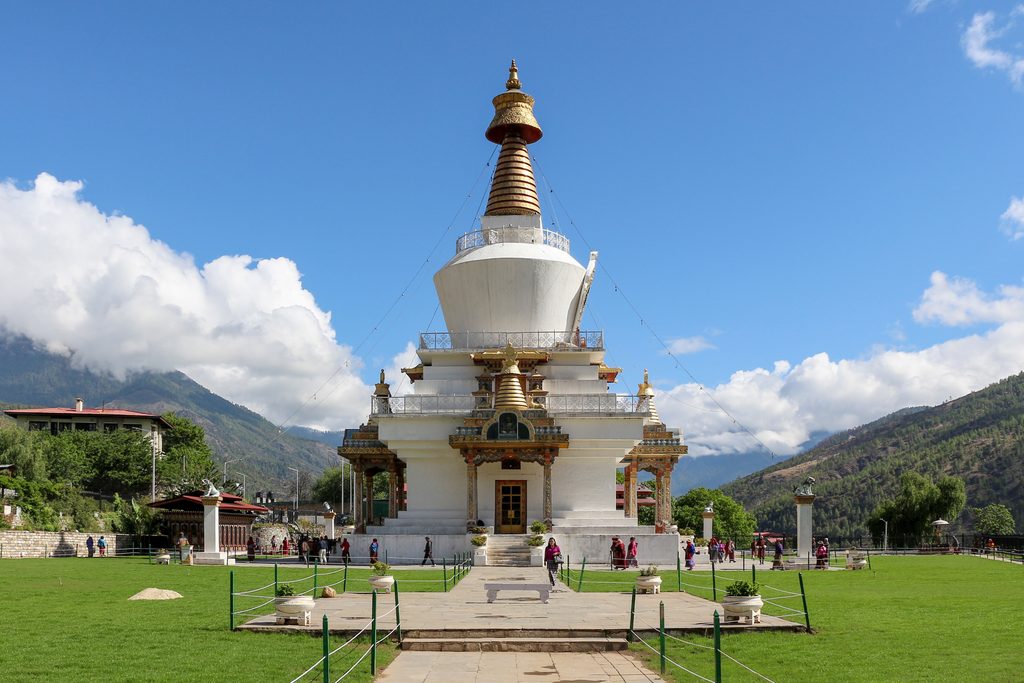
National Memorial Chorten (also called Thimphu Chorten or Memorial Stupa) is one of the most prominent and frequently visited religious landmarks in Thimphu, Bhutan’s capital.
This large white Tibetan-style stupa was built in 1974 to honour the Third Druk Gyalpo (King), Jigme Dorji Wangchuck (1928–1972), widely known as the “Father of Modern Bhutan.” It was commissioned by his mother, Queen Ashi Phuntsho Choden Wangchuck, and designed by Thinley Norbu Rinpoche in the Nyingma tradition. The king had wished for a chorten representing the enlightened mind of the Buddha; after his death the monument fulfilled that vision and became a national memorial.
Unlike many traditional stupas, it does not enshrine human remains. A portrait of the king in ceremonial dress is displayed on the ground floor. The chorten is a major centre of daily devotion for Bhutanese people, who come to perform kora (circumambulation), spin prayer wheels, light butter lamps, and offer prayers. It is often described as the most visible religious landmark in Bhutan and a living spiritual hub rather than a static monument.
Standing about 33 metres (108 feet) tall, the structure is a Jangchub Chorten (Tibetan-style stupa) with a distinctive vase-like form that flares outward rather than forming a classic dome. It is crowned by golden spires, a crescent moon and sun emblem, and bells. Ornate annexes face the four cardinal directions, and the exterior features intricate decorations.
Visitors approach through a garden and an ornate gate with carvings of the three protective bodhisattvas: Avalokiteshvara (compassion), Manjushri (wisdom), and Vajrapani (power). Inside (on multiple floors) are murals, statues, mandalas, large prayer wheels, and a shrine dedicated to the late king. Giant prayer wheels stand near the entrance and are constantly turned by devotees.
The National Memorial Chorten offers an authentic glimpse of everyday Bhutanese spirituality in the heart of the capital. It is a standard stop on Thimphu sightseeing itineraries and pairs well with nearby sites such as Tashichho Dzong, the Buddha Dordenma, Changangkha Lhakhang, or the craft markets. As with other major sites in Bhutan, foreign visitors typically access it as part of a licensed guided tour.