
Kurjey Lhakhang
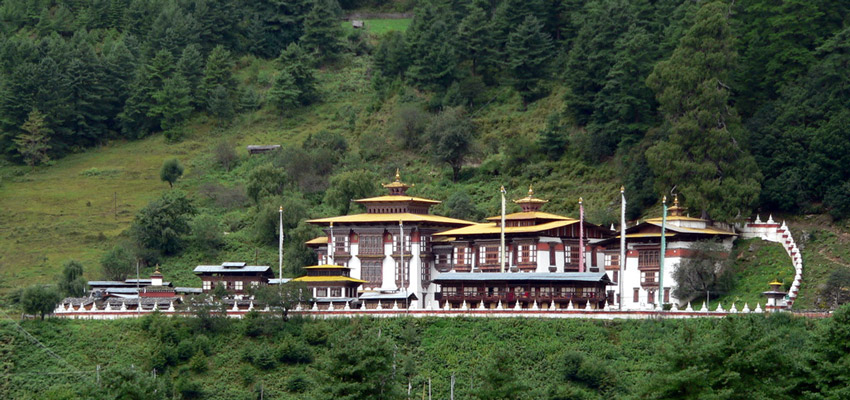
Kurjey Lhakhang (also spelled Kurje Lhakhang) is one of Bhutan’s most sacred temples, located in the Bumthang Valley (near Jakar/Chamkhar) in central Bhutan. It is renowned for the body imprint of Guru Rinpoche (Padmasambhava) left in a rock cave.
The name “Kurjey” comes from kur (body) and jey (imprint or print). According to legend, in the 8th century the local king Sindhu Raja (or Sintu Raja) of Bumthang fell gravely ill after his life force (sog) was stolen by the powerful local deity Shelging Karpo. His ministers invited Guru Rinpoche, who meditated in a cave at the site (known as Drakmar Dorje Tsekpa, the “Diamond-Piled Red Rock”) for three months. Through ritual power he subdued Shelging Karpo, forced the return of the king’s life force, and converted the deity into a Dharma protector. During this meditation Guru Rinpoche left a natural imprint of his body in the rock. He is also said to have established the first teachings of Vajrayana Buddhism in the region here.
A sacred spring known as Kurjey Drupchhu is associated with the site and is believed to have healing properties. A large cypress tree behind one of the temples is said to have grown from Guru Rinpoche’s walking stick. The complex is also the final resting place of the remains of Bhutan’s first three kings.
The site consists of three main temples built at different times around the sacred cave, enclosed by a wall of 108 chortens:
Pilgrims often crawl through a narrow rock passage near the temples, believed to cleanse sins. The courtyard and surrounding area are used for festivals, including the Kurjey Tshechu.
Kurjey Lhakhang is a highlight of any Bumthang itinerary, combining profound spiritual history, architectural beauty, and a powerful sense of place. It is typically experienced as part of a licensed guided tour of central Bhutan.