
Dochula Pass
Dochula Pass (Dochu La) is one of Bhutan’s most scenic and spiritually significant mountain passes, located on the main highway between Thimphu and Punakha.
Sitting at an elevation of approximately 3,100 metres (about 10,200 feet), Dochula is a high ridge pass that marks the transition between the temperate climate of the Thimphu Valley and the warmer subtropical Punakha Valley. It is a standard and memorable stop on almost every cultural itinerary linking the two regions (roughly 22–30 km / 45–60 minutes’ drive from Thimphu).
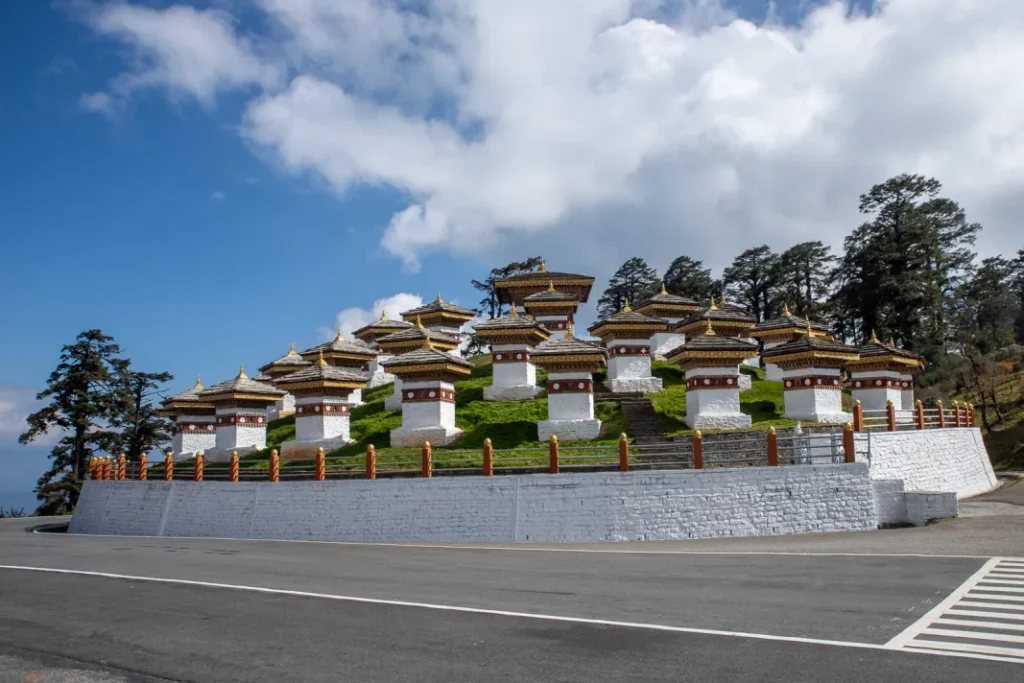
The pass is best known for the 108 Druk Wangyal Chortens (also called Druk Wangyal Khangzang Chortens), a striking cluster of white memorial stupas with red bands and golden pinnacles. These were commissioned by the eldest Queen Mother, Ashi Dorji Wangmo Wangchuck, and completed/consecrated in 2004. They honour the Bhutanese soldiers who lost their lives in the December 2003 military operation (led personally by the Fourth King) that cleared Assamese insurgent camps from southern Bhutan. The number 108 holds deep significance in Buddhism. The chortens are arranged in three ascending tiers (45 at the base, 36 in the middle, and 27 at the top) around a central larger chorten.
Above the chortens stands the Druk Wangyal Lhakhang, a temple completed in 2008 to mark the centenary of the monarchy and dedicated to the Fourth King. Its murals blend traditional and more contemporary themes.
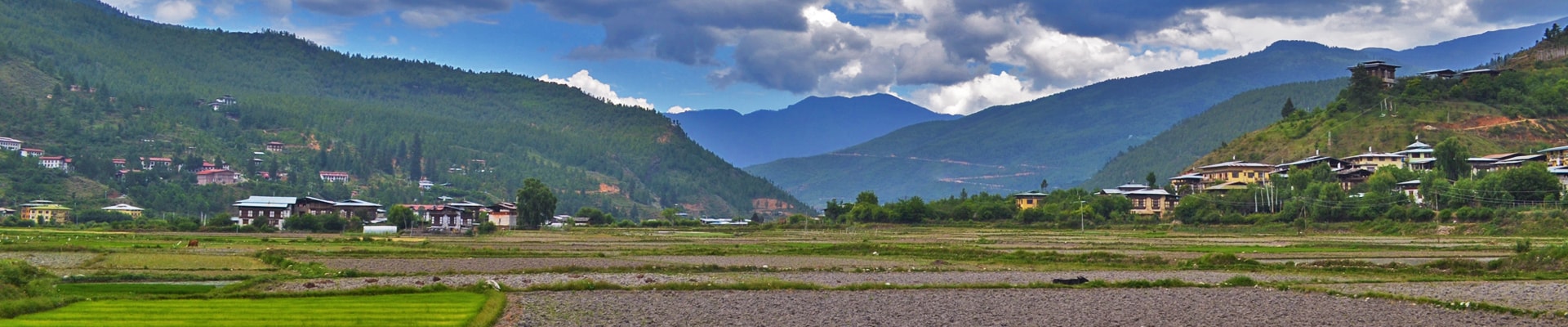
On clear days—especially early mornings from October to February—the pass offers panoramic views of the eastern Himalayan range. Visible peaks can include Gangkhar Puensum (7,570 m), Bhutan’s highest mountain and the world’s highest unclimbed summit, along with other high peaks such as Masanggang. Cloud and mist frequently build later in the day, so timing matters. In spring (March–May), rhododendrons bloom on the surrounding slopes, adding colour even if mountain views are partial.
The site feels both solemn and serene: prayer flags flutter, pilgrims walk among the chortens, and the high-altitude air is cool and often windy.
Dochula Pass is more than a viewpoint—it is a modern memorial that embodies Bhutanese values of remembrance, merit, and respect for the landscape. Most travellers pause here en route to Punakha Dzong, making it a natural and atmospheric highlight of the journey.