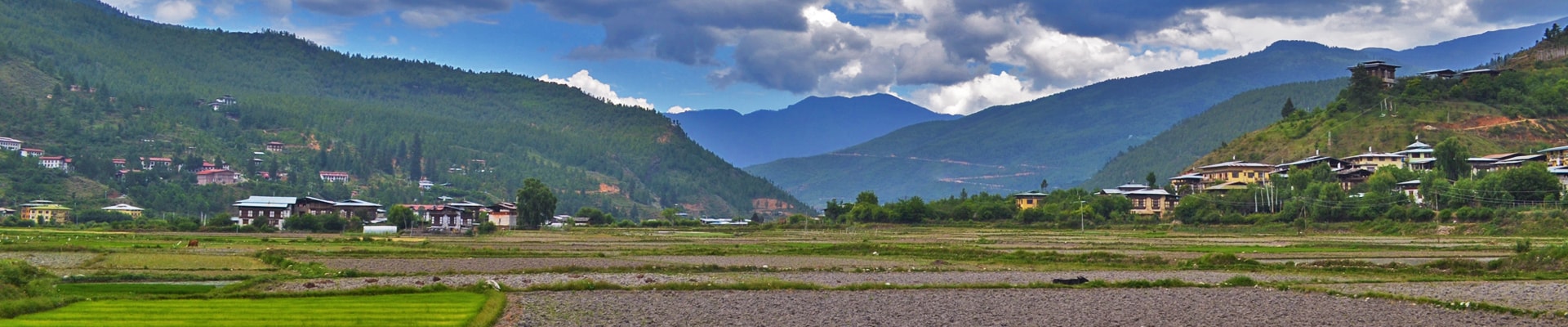
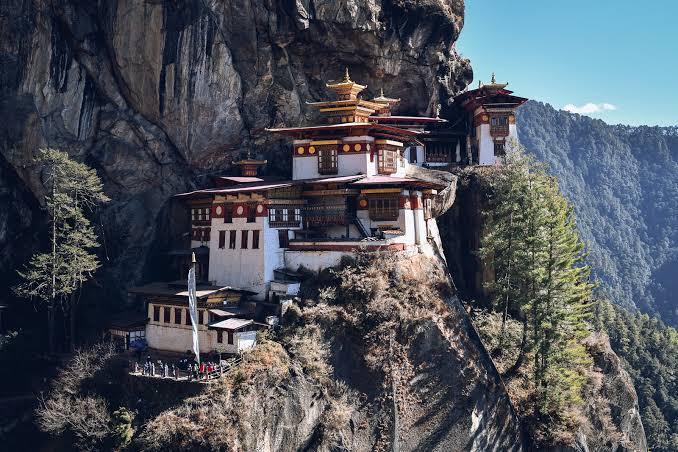
Paro Taktsang (Tiger’s Nest Monastery) is Bhutan’s most iconic and sacred landmark — a dramatic cluster of temples clinging to a sheer cliff face high above the Paro Valley.
Overview and Significance
Located about 10–12 km north of Paro town in western Bhutan, the monastery sits at approximately 3,120 metres (10,240 feet) above sea level and roughly 900 metres above the valley floor. It is one of the holiest sites in the Himalayan Buddhist world and a major pilgrimage destination.
According to legend, in the 8th century the tantric master Guru Rinpoche (Padmasambhava) — credited with introducing Vajrayana Buddhism to Bhutan — flew to this spot from Tibet on the back of a tigress (a manifestation of his consort Yeshe Tsogyal). He meditated in a cave here for three years, three months, three weeks, three days and three hours (accounts vary slightly on the exact duration), subduing local demons and establishing the site’s sanctity. The name “Taktsang” means “Tiger’s Lair” or “Tiger’s Nest.”
The present monastery complex was built in 1692 by Gyalse Tenzin Rabgye (the 4th Druk Desi) around the original meditation cave. It comprises several temples, caves, prayer halls and residences linked by stone stairways and bridges. A major fire in April 1998 destroyed much of the main structure; it was fully restored and reopened by 2005.
The Hike
Reaching the monastery requires a moderate hike that is the highlight of most Paro visits:
- Distance: Approximately 6–10 km round trip (sources commonly cite ~6.5 km or about 4.5–5 km one way).
- Elevation gain: Roughly 500–900 metres from the trailhead parking area.
- Duration: Typically 4–6 hours round trip (2–3 hours up, time at the monastery, 1.5–2 hours down), depending on fitness, pace and rest stops. Allow a full day.
- Difficulty: Moderate. Steady uphill through blue pine and rhododendron forest on a well-marked dirt path with switchbacks, followed by steeper stone steps and a final descent/ascent involving hundreds of steps near the end. Average fitness is usually sufficient; altitude can make it feel harder.
Trail stages (approximate):
- Parking lot to the midway cafeteria/viewpoint (about 1.5–2 hours) — the steeper section.
- Cafeteria to the final viewpoint and monastery approach.
- Descent into the complex via steps and a bridge.
Horses or mules can be hired from the base to the cafeteria (halfway point) for those who prefer not to walk the full ascent. The final stretch must be done on foot. Walking sticks are available for rent at the start.
Start early (aim to leave Paro by 7–8 AM) to avoid crowds and afternoon clouds or heat.
Practical Information
- Access: Short drive (15–30 minutes) from Paro town or the airport to the trailhead parking area. Foreign visitors must travel with a licensed Bhutanese guide as part of an organised tour package (independent travel is not permitted for most nationalities).
- Opening hours: Generally 8 AM–1 PM and 2 PM–5/6 PM (confirm locally; closed for lunch).
- Entrance fee: Recently revised (as of mid-to-late 2026 reports) to around Nu. 2,000 for adults (approximately USD 24), with 50% for children under 18 and free for those under 5 or 6. Fees are often included in tour packages. Check the latest rates, as they can change.
- Rules: Photography and bags/cameras are not allowed inside the temples (lockers available at the entrance). Remove shoes and hats before entering. Modest dress and respectful behaviour are required. No independent hiking without a guide.
- Best time to visit: Spring (March–May) for rhododendron blooms and clear weather, or autumn (September–November) for crisp skies and cooler temperatures. Avoid the monsoon if possible due to slippery trails.
- What to bring: Comfortable hiking shoes/boots, layers (it can be windy and cooler at the top), water, snacks, sunscreen, hat, and walking stick if needed.